
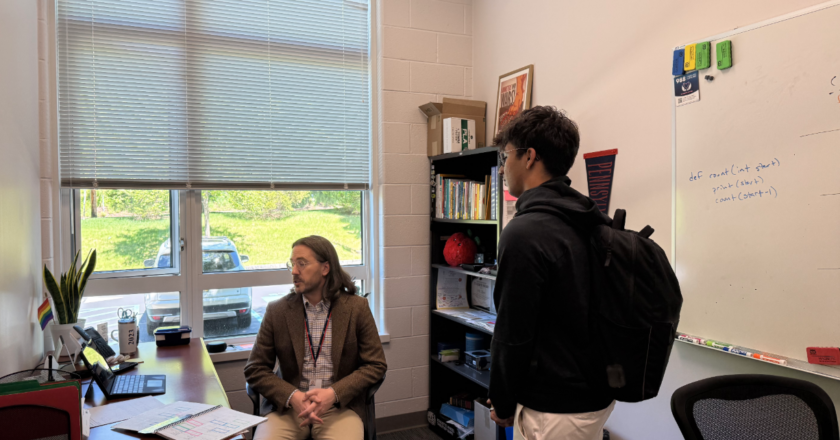


In AP Computer Science classes, the feedback process often goes like this: you self-score your assignment based on a loose rubric, wait for a teacher to grade it, and that’s it. Only two solutions are considered. Mr. Baber’s startup Spigat aims to improve on that.
Spigat is a web-based platform built to facilitate peer feedback in schools that transforms one-way grading into collaborative learning experiences.
The inspiration for Baber came from his AP Computer Science A class. His students consistently struggled on how to submit accurate answers for free-response questions.
Additionally, they did not understand how their answers would be graded or what constituted a good response. After observing struggling students he decided to develop a tool to make the peer grading process easier.
Spigat was initially a tool designed for self assessment using AP rubrics to better understand their work and also familiarize themselves with AP questions. Mr. Baber quickly realized that it would be more beneficial to the students if they could peer assess others’ answers as well.
Along with a team of developers hired by Mr. Baber, two GA students are interning with the startup. Om Popat ‘28 and Rushil Reddy ‘27 have been regularly meeting with Mr. Baber to test the program, search for flaws and discuss improvements.
“We have meetings once or twice a week where we all go on our devices and we log in through test accounts,” Popat said. “We have our own school that we made for testing the product. Then we screen, record and document all the bugs that we encounter.”
Using a separate test “school” created solely for testing Spigat the team has been able to find and fix bugs. Mr. Baber has specifically found their numbers helpful to get through the struggle of testing alone.
“If you want to accurately test it, you actually need multiple people and multiple different computers interacting live at the same time,” Baber said. “So it’s not something that I can easily test just at home by myself. So, having them was invaluable.”
Looking ahead, Mr. Baber has ambitious goals for the platform’s reach and impact.
“I would hope that it becomes a widely used assessment tool in independent schools,” Baber said. “I’m targeting initially independent schools, primarily high schools, but also middle schools, but I actually believe that the process of rubric-driven group feedback is a process that can be used in any setting in corporate boards, in creative disciplines beyond just schools.”
Spigat is being developed as a tool for school students to use to further their review process. After the product becomes fully functional, Mr. Baber and his team hope to spread it as a useful tool to schools across the country.