
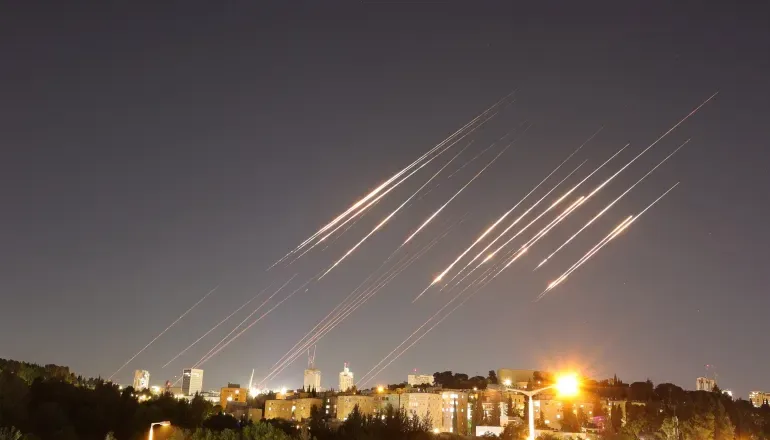


At 1:15 AM EST on February 28, 2026, the United States (U.S.) and Israel collectively commenced Operation Epic Fury (OEF). This operation primarily involved the missile strikes of key Iranian locations, such as government headquarters, command and control centers and nuclear sites, to ultimately eliminate the imminent security matter posed by the current theocratic regime and termed Operation Lion’s Roar in Israel. OEF was intended to neutralize the Iranian government’s “security apparatus”; According to the United States Central Command (CENTCOM), this operation involved the deployment of several U.S. assets, including fighter jets, stealth fighters, bomber planes, aircraft carriers and anti-ballistic missile systems.
During the initial phase of this conflict, the United States and Israel aimed to destabilize the Iranian leadership team through the assassinations of Ayatollah Ali Khamenei, Iranian Supreme Leader; Aziz Nasirzadeh, Iran’s Defence Minister and Mohammad Pakpour, Commander of the Iranian Revolutionary Guard Corps (IRGC), among others.
A week later, new members, including the former Ayatollah’s son, Mojtaba Khamenei, were appointed in the government to take over command.
This widespread assassination effort angered the remaining Iranian administration, which prompted retaliatory strikes against not only U.S. bases and Israel but also the territory of many key Gulf allies. This included Kuwait, Saudi Arabia, the UAE and Qatar.
The Iranian retaliation has been met with increased American and Israeli preemptive action, and the conflict has grown into a regional war. This exchange of strikes has aroused global fear of another devastating conflict, such as a potential World War III.
However, the fallout of the collective US-Israel strikes on Iran extends beyond military action. On March 2, 2026, only three days after the initial exchange of strikes, the IRGC shut off the Strait of Hormuz, pressuring economies across the globe.
Nearly 20-25% of the global oil supply flows through the Strait of Hormuz. Therefore, even the slightest disruption carries numerous economic consequences for highly petroleum-dependent economies, such as the United States. Currently, CENTCOM, in an effort to ensure that oil continues to flow from the Persian Gulf, has been keeping the Strait of Hormuz open through force.
The recent developments in the Middle East are not spontaneous. In the view of the U.S., they are responses to limit Iran’s globally destabilizing ambitions. In the past, this primarily involved the funding of Iranian proxies, such as the Yemeni Houthis and the Lebanese Hezbollah militants.
However, the primary cause of concern for not only the U.S. but also for the whole planet is Iran’s efforts to assemble a fully functional nuclear arsenal. Many global leaders believe that arming a country with a history of nuclear proliferation concerns with nuclear assets will lead to global ruination.
More importantly, though, this development can potentially empower Iranian-backed militant groups to increase and strengthen their disruptive activity, even if Iran does not directly arm them with nuclear weapons.
Given the momentous nature of the Iran conflict, many global leaders have issued a variety of mixed responses. Besides Donald Trump, President of the U.S., and Benjamin Netanyahu, Prime Minister of Israel, several notable figureheads such as Javier Milei, President of Argentina; Volodymyr Zelenskyy, President of Ukraine and Edi Rama, Prime Minister of Albania, have hailed the conflict as a potential liberation of the Iranian people from an oppressive regime.
In contrast, Xi Jinping, President of China, and Vladimir Putin, President of Russia, have condemned the attacks, calling them a “grave violation of international law”.
Despite this sharp disagreement regarding the Iran conflict, the majority of global leaders align on a neutral, diplomatic stance. Many have called for restraint and de-escalation. Among these voices are Emmanuel Macron, President of France, and Narendra Modi, Prime Minister of India.
The conflict of Iran not only affects soldiers, civilians, or even disgruntled political leaders. Although the U.S. mainland remains physically untouched by the military action unfolding halfway across the globe, the conflict carries significant implications for the future of the global order.
“U.S. military actions, no matter how small or limited, always have the potential to cause significant effects on the population of the countries involved,” Mr. Bob Moyer, Upper School History Teacher, said.
Towards that end, teachers strongly emphasize the importance of staying informed and updated on contemporary events. This is especially evident at Germantown Academy, where students are carefully nurtured to become future leaders.
“Everyone needs to stay aware of what these collective actions might do to U.S. relations with other nations,” Mr. Moyer said. “What it might do to our economic and political stability, and to our role as citizens in a government that conducts such operations.”
The imminent security matter arguably could lead to GA transitioning to online learning to protect the members of the school. It could also lead to more educational discussions surrounding the events of this conflict. Security matters could also be increased and the students could have emotional and psychological distress surrounding the topic.
The future of the Iran conflict remains unclear. Increasingly, additional US and Iranian allies and partners are getting involved, and the blockade in the Strait of Hormuz has starved global economies of an especially valuable commodity, oil. US efforts to “keep oil flowing” have intensified conflict beyond the original strikes, threatening international stability and straining ties in the Middle East.