


World War II (WWII) was one large reset that quieted everything down. It forced everyone to work together for peace. The pot has been simmering for generations. Tensions have been rising, and something has to give – whether it be WWIII or the decline of the facade of “international order.”
The unipolar order has been evolving into something new. An order where multiple countries ___ Increasingly, countries believe it’s changing and are adapting their behavior, aspiring to adopt this emerging multipolar order. This includes forging alliances and protecting their own interests to maximize benefit in this new order just as they did in the old unipolar order.
As a result, countries isolate themselves in bubbles of self-interest, causing exactly what Canadian Prime Minister Carney feared: the powerful benefit, while others struggle. The fallout of this is that there’s no consensus on how to proceed, creating disunity between nations. The fact is, there has been a shift in the world order. How to adapt is where opinions, while similar at times, differ.
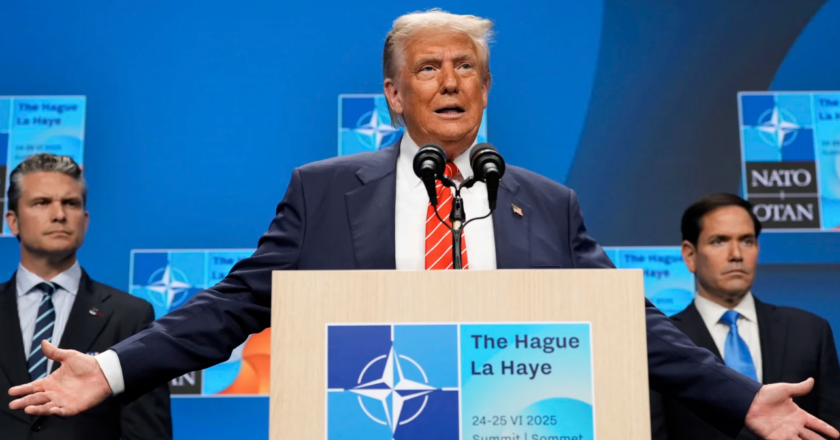
For example, Canada favors unification of middle powers (fearing increased control by superpowers), benefiting them in the rise of the new order, while the U.S. threatens decreased funding for North Atlantic Treaty Organization (NATO) every time others don’t pay their promised share and because of the failure to support the U.S. when asked. This pattern remains true across the board.
WWII pulled countries together, including the Soviet Union (present-day Russia) and the U.S. This doesn’t mean the two countries were allies; it just meant they were the lesser of two evils. Historically, the world has operated this way, and change is the constant with self-interest always the deciding variable.
Countries’ own interests might have been their priority all along. The reason we’re currently experiencing a decline, perhaps a rupture, in the order, is that countries’ interests no longer align. The very attempts of countries adapting their policies to secure adequate benefit in this new world order is the root cause of the turbulence.
Specifically, Carney asks “middle powers” to rally together and not pretend the rules-based order is working as intended, when in actuality it is powerful countries weaponizing economic policies to gain control of weaker nations. i.e. current American tariffs. He says, “Middle powers must act together, because if we’re not at the table, we’re on the menu.” (How do I cite this)
Carney’s true goal is protecting Canada from being controlled by more powerful countries, using aid to other countries as an excuse. Understandably, Canada is and always will be his number one priority; he’s just killing two birds with one stone.
Rather than accommodating for power moves from larger countries, he attempts new alliances that further strain the existing order, this makes Canada a new asset in the rising multipolar order; a perfect example of behavioral change to create security.
U.S. policies have been modified to prioritize our goals, success and protection (financially, technologically, militarily, etc.), more openly.
For example, the Department of War (DOW) plans to reduce their contributions to NATO when member countries fail to meet their commitment, stating they want NATO to be as originally intended: “A balanced alliance with Europe in the lead for its own defense.”
The DOW also wants to ensure free access to and mobilization of their troops with full support from the country in question. The U.S. is taking a stand. Why should they fund most of NATO’s forces without deployment rights? It has insisted on U.S. interests being met first, because, as Carney said, they do have the leverage to do so. The U.S. is making other NATO countries aware that, in order to lead with ideas, they need to comply with funding agreements.
The U.S. is changing its behavior as a reaction to other countries trying to assert themselves in this emerging multipolar world. This new funding requirement doesn’t align with European countries’ wishes – why spend extra money on their military when they already have the U.S. military. While being compliant, being publicly manhandled leaves a bitter taste.
I feel it would be advantageous to the U.S. to be more diplomatic while dealing with other countries, and more aggressive negotiations should be conducted behind closed doors, allowing difficult decisions to be made while others save face.
Even though some proposals might be the most beneficial, the U.S. can’t expect continued or enthusiastic compliance while publicly strong-arming countries. Eventually, countries will have had enough, as demonstrated by the proposed Canada-European Union (EU) alliance. Less aggressive and more diplomatic negotiations will help ease the transition to the new multipolar order, something we desperately need at this time.
The question is, is the geopolitical order experiencing a rupture or a collapse. My argument is that the old unipolar order is experiencing a shift into something new, and we can see it, as countries adapt their behavior to adapt to it.