
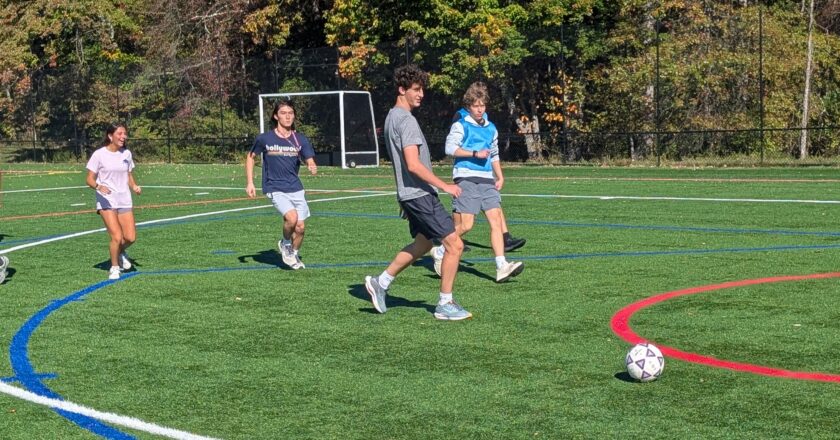

Physical education (PE) classes are mandatory for students in the 9th to 11th grade, with the intention of exposing students to a variety of sports, giving them a break from academics during the school day and making sure they stay active. However, for student-athletes who already get hours of fitness every week, is it really necessary?
For students who aren’t in any form of athletic training, having PE as a class is important. While acknowledging that students have varying interests, and sports may not be one, staying active and getting daily movement is still a universal, overarching need.
“I think the upside to having PE as a class is that a lot of people only try one form of exercise, whether it’s ‘I like to run in the mornings’ or ‘I play this one sport’,” Rebecca Rong ‘26 said. “PE is really nice as it gives you a wide range of exposure to exercise.”
Yet, for student-athletes, especially those who do a sport year-round, taking PE often feels redundant. The average high school varsity athlete already gets 10-15 hours of physical activity every week, and doesn’t need an extra class dedicated to it. Having their sport serve as a PE credit, especially if they are active for most of the year, would allow them to take a more meaningful class instead of doing extra unnecessary fitness.
Many students, perhaps for college applications or out of passion, would rather be taking a course other than PE. Having this class built into the schedule occupies a period during which they could be taking a different or more valuable course. Whether it’s statistics, economics or band, sacrificing higher-priority classes to take PE is a recurring predicament that student-athletes shouldn’t have to face.
“I think most people see the downsides of PE as being sort of a waste of time, because a lot of people are already doing athletics after school, and a lot of people are living pretty active lifestyles,” Rong said. “I think people would much rather be using that time to either study, because academics are pretty rigorous, or not trying things that aren’t important to them.”
After going through many classes of reading, notes and lectures, seeing PE as the next class on your schedule is often a relief. However, a free period gives the same opportunity to unwind with even more flexibility. This is especially important for student-athletes, who dedicate lots of time outside of school to sports and could use this period to catch up on work instead of extra workouts.
Moreover, when deciding how many players should be offered an exemption, the different sport formats should be noted. Allowing only varsity players to skip wouldn’t be objective, since sports like football have much larger teams than tennis. Yet, permitting all players, including JV, to skip may prompt students to join without genuine commitment, especially in sports with no cuts. To maintain fairness, establishing a standardized number of exempt players is necessary.
Ultimately, because PE is mandatory for students until junior year, they lose a period where they could be taking a more purposeful course or a free period to reset. For varsity student-athletes, who already get plenty of rigorous exercise, it would be beneficial to make PE an optional class, so they can choose to skip the redundant fitness and get more flexibility in their schedules.