
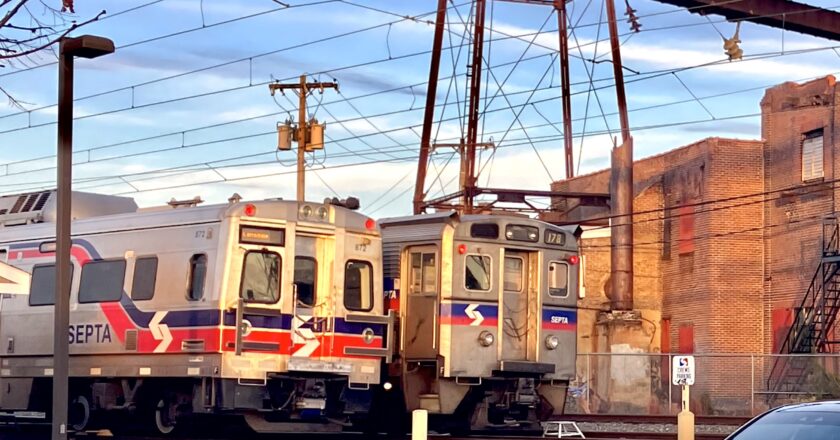

Currently, in Pennsylvania, there are labor disputes occurring in Southeastern Pennsylvania Transportation Authority (SEPTA) that involve Transport Worker Union (TWU) Local 234, representing over 5,000 SEPTA workers. They have requested better wages and more safety precautions after their temporary one-year contract had expired on Nov. 7, 2025. They are hoping for a longer, two-year contract as well, especially because of SEPTA’s financial unreliability.
TWU Local 234 even authorized a strike against SEPTA on Nov. 16, 2025, to be originally used as a negotiating tool for a new contract. However, after recent negotiations, the strike was described as “imminent” by TWU Local 234, suggesting that a strike is due to occur until further circumstances are placed.
SEPTA itself is undergoing a financial and budget crisis that is leading to multiple cuts in Regional Rail and metro service, despite pushing the state for better funding. These issues started around the COVID pandemic, around 2020, when ridership decreased significantly while costs to keep SEPTA running kept increasing, and the state funding for SEPTA has been decreasing as well. On June 26, 2025, SEPTA’s board formally approved a “doomsday” 2026 budget to address a $213 million structural deficit, including service cuts that have been happening since August 2025.
Not only that, but its Silverliner IV railcars went under inspection and repairs after multiple repeated incidents of fires occurring due to aging fleets, resulting in service disruptions such as canceled trains, fewer railcars and skipped stations. However, all inspections are finished, but railcars may not return to service until mid-December or even January.
“You have less room on the train,” Mr. Adam Fisher, Upper School French teacher, said, “which means sometimes, coming into the city, especially during those busy times, they have to skip stations, and they can’t pick anybody up if they’re at max capacity.”
Reduced capacity is especially affecting trains, trolleys and buses that go through Center City, Philadelphia. Popular Regional Rail lines affected include the Airport line, the Fox Chase line, the Trenton line and the Chestnut Hill West Line. GA community members have reported trouble with the Lansdale Doyleston line as well.
Because of SEPTA’s recent service reliability issues, riders across the region, including those at GA, have been severely impacted. SEPTA is still a means of transportation for many.
“I couldn’t come to teach if there was no SEPTA–I don’t drive,” Ms. Sonia Robin, Upper School French teacher, said. “And my kids come to GA, so it’s really important for us to go to school and go to work using SEPTA.”
There have also reportedly been many abrupt cancellations of trains minutes before arrival. This creates a lot of problems with scheduling and the immediate commute to work or school, and many people at GA can end up arriving late or not at all.
“I have to take the early train most of the time. Otherwise, I can’t just assume that the regular train is going to be on time or even show up,” Ms. Robin said. “We very frequently hear about a train cancellation only 20 minutes before the train is supposed to arrive at the station.”
For a lot of people, SEPTA is the only source of transportation that is convenient, especially with traffic issues in a couple of areas. If a strike were to occur, people who commute to and from Philadelphia would particularly be affected, as a number of 51,000 students of the Philadelphia School District rely on SEPTA’s transportation and will be forced to commute differently, not covering teachers, workers, and anyone else who uses SEPTA frequently.
“Driving from where I live to here is two or three times slower than taking the train, typically,” Mr. Fisher said. “And I have to share a car with my fiancée, so her life would be affected as well, because she will take the train sometimes too. And if we’re both trying to navigate that, we have to figure out a way to share the car.”
SEPTA’s internal conflict with financial and safety issues and tension with TWU Local 234 are presenting problems of service unreliability and even a possibility of a strike occurring. These problems are currently causing issues in commuting for people who rely on their services, including those at GA, and are raising concerns about what future SEPTA transportation will look like.