
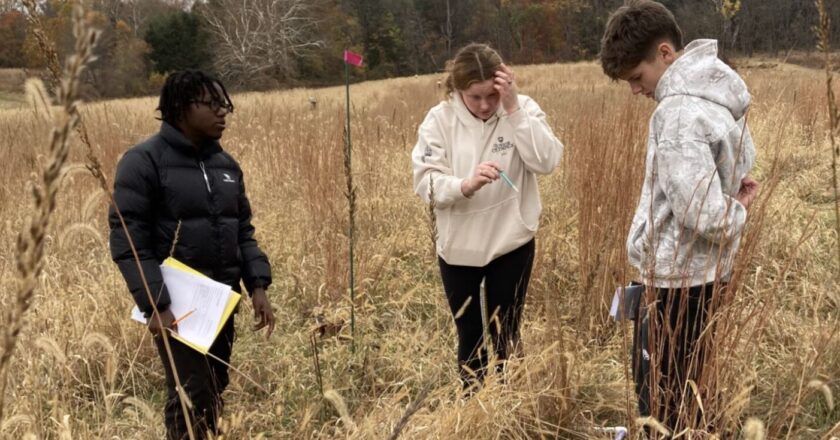

The best education happens off-campus: field trips offer experiences that deepen understanding beyond what’s possible in the classroom. Yes, they are fun. But going beyond this superficial stance, field trips build curiosity, success and a stronger sense of connection to the world around us—that’s exactly why we need more of them.
Field trips provide a necessary break from mechanical, academic routines, giving students a chance to mentally reset. Taking a break from the classroom brings excitement and freedom that can make learning feel refreshing rather than repetitive.
Field trips also create a space for students to connect with friends that don’t always exist inside the classroom. Whether it’s sitting together on the bus, exploring exhibits or sharing the excitement of being somewhere new, these moments strengthen friendships and build a sense of community.
These experiences help create memorable “firsts” that stick with students throughout their lives. For example, the entire eleventh grade went to the National Constitution Center a couple of months ago. For me, it was a truly rich experience: I got to see physical artifacts and listen to a federal judge. My time there not only exposed me to a new, interesting environment, but also connected my classroom learning to real-world aspects.
Beyond the immediate fun, these experiences often become the moments students remember long after school ends. Field trips stand out because they blend learning with adventure, creating memories and education that are shared with friends and connected to real places.
Field trips fuel academic excellence. In fact, a study from the U.S. Travel Association showed that students who went on field trips earned better grades, were more likely to graduate from high school and college and later made 12% more annually. In addition, 89% of adults claimed that field trips had a lasting impact on their education and career because these experiences made them more engaged and intellectually curious.
Real-world learning is where field trips shine. Visiting a physical site rather than reading from a textbook helps students see how the concepts they learn in class actually function in everyday life. In other words, field trips are the tethers that connect school and the real world.
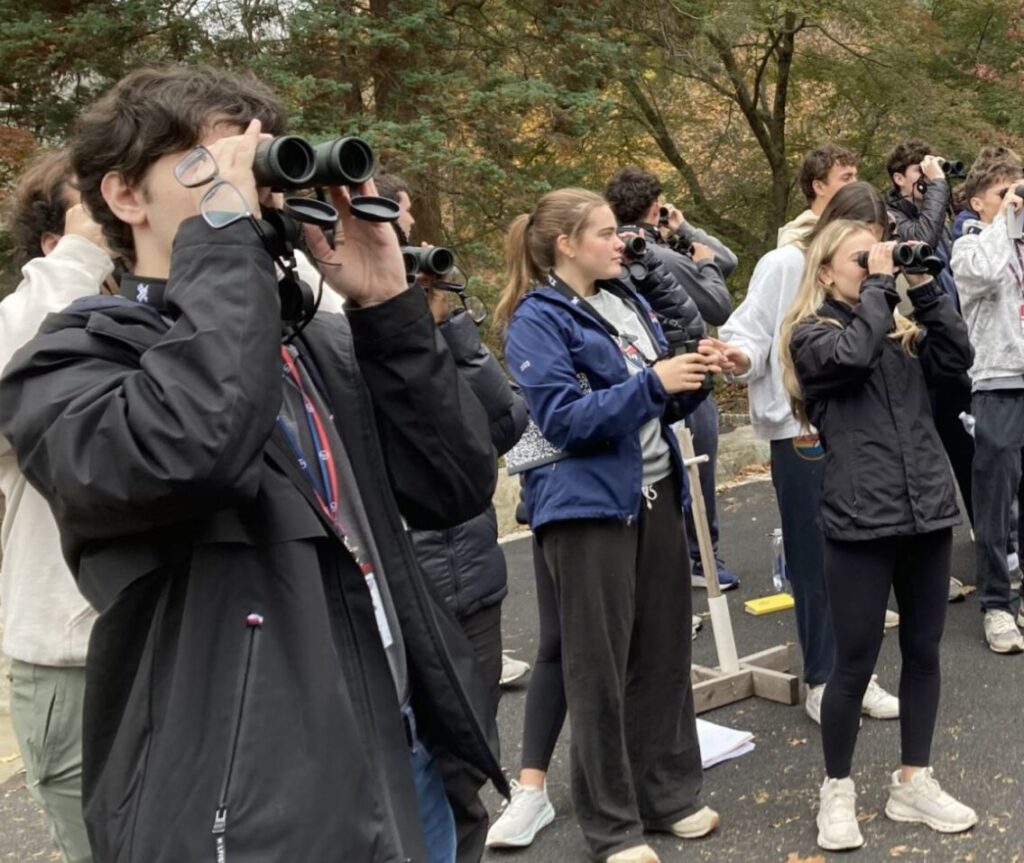
The benefits of field trips extend far beyond academics: they promote social and emotional growth. A study by the University of Arkansas found that students, after attending a field trip to an art museum, displayed more empathy and tolerance. Additionally, they were also better critical thinkers.
Field trips expand students’ worlds. They offer students opportunities to step into new environments. Ranging from museums to theaters, these experiences cannot be replicated by a slideshow or Google search.
Field trips are powerful extensions of the classroom that shape a student’s educational journey. A classroom is limited by four walls, but the real world is not since it’s not defined by an enclosed space, offering endless possibilities. That’s why we need field trips: they give students a look into these possibilities. If we want students to grow beyond textbooks, we need to give them more opportunities to step outside, explore and discover.
Sources:
https://www.explorableplaces.com/blog/the-benefits-of-field-trips
https://www.neamb.com/work-life/how-field-trips-boost-students-lifelong-success