
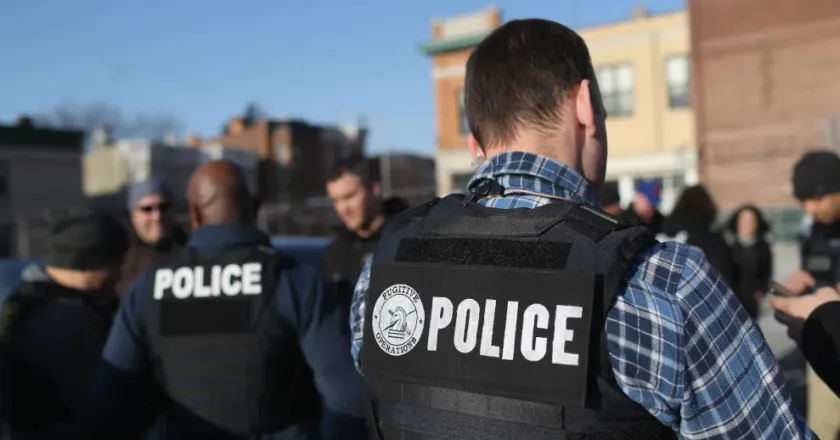

The shootings of protesters Renee Good and Alex Pretti by border patrol agents in Minneapolis have served as major focal points in the debate over the legality and ethics of implementing federal forces in US cities to detain illegal immigrants, as well as the administration’s mobilization and funding of Immigration and Customs Enforcement (ICE).
The Minneapolis protests have occurred as a response to Operation Metro Surge, an ongoing operation by ICE and Border Patrol to arrest illegal immigrants by sending large numbers of ICE agents across Minnesota.
“The widespread deployment and scale of ICE in cities to arrest illegal immigrants is something unprecedented in the United States in terms of immigration policy,” Lauren Kim ‘27 said.
As major protests against ICE unfold in cities nationwide, several mayors have increased pressure on the Trump administration to rescind the widespread implementation of agents. On Jan. 29, Minneapolis Mayor Jacob Frey urged other mayors to stand up to ICE, warning that their cities would be next if they did not.
“Members of Congress are starting to show minimal signs of exercising the duty of their branch of government,” Upper School history teacher Dr. Kimmel said. “But they should be doing more to be responsive to their constituents.”
Even after ICE received a massive funding increase from $10 billion to $85 billion in 2025, funding legislation for 2026 provides an additional $400 million for detention infrastructure and $370 million for enforcement.
The massive amount of funding that is going into ICE and the type of equipment they are being supplied with is similar to the very highest level of gear that US troops going into close urban combat would be supplied with,” Dr. Kimmel said.
$8 billion of the total allocated to the Department of Homeland Security (DHS) for ICE expansion was directed towards recruitment operations to meet the Trump administration’s goal of increasing the number of agents, with the number of officers increasing from 10,000 to 22,000.
To achieve this, the DHS has also reduced hiring restrictions, including lowering the age requirement to 18 years and reducing the amount of training that officers receive from 16 to 6 weeks. Internal reports have also revealed that ICE placed some recruits into training without properly vetting them.
In the wake of the recent Minneapolis shootings, the DHS has blocked efforts to investigate the ICE agents, even offering narratives that are at odds with what the video evidence of the situations suggests. Chicago mayor Brandon Johnson called for investigations into ICE agents over their behavior, calling them “rogue federal agents” causing “chaos and confusion.”
The Trump administration has defended Operation Metro Surge as a necessary step to apprehend illegal immigrants and claimed both of the ICE shootings resulted from the officers being attacked first or operating in self-defense.
Although ICE remains a force confined to the news for many members of the GA community, its impact on the current political landscape and implications for the future keep it a mainstream topic in the minds of many GA students. The events shaped by the administration’s policies, in turn, can help shape the political views held by students.