
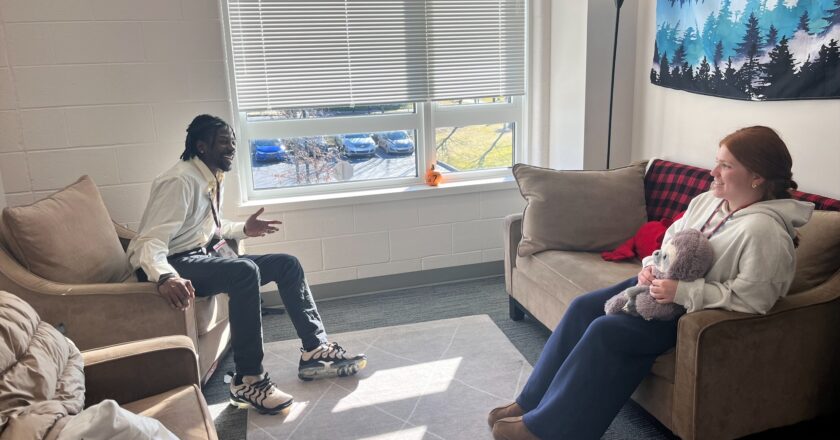


Throughout the duration of the Germantown Academy school year, one can expect numerous events regarding mindfulness, yoga and meditation, among others. These activities are meant to maintain our emotional, psychological and social well-being.
These structured activities, most notably Venerable Losang Samten’s comprehensive mindfulness session, have consistently attracted large numbers of individuals, all seeking genuine respite and peace in the midst of a demanding, continuous life. This significant voluntary participation demonstrates that many students are actively seeking out opportunities to prioritize their mental health.
Organized primarily by the counseling department, these events correctly acknowledge that mental health is not merely an academic concern but also a fundamental pillar of individual success and school-wide well-being. These mental health sessions represent a strong, necessary step towards promoting the internal balance of the student’s mind and body.
However, the current method, which promotes voluntary mental health programs while simultaneously maintaining mandated educational units, is fundamentally flawed in its execution and must be seriously reconsidered by the GA administration in its effectiveness and purpose.
While we have never once felt unsupported by GA’s staff, the core issue truly lies in the counterproductive nature of compulsory wellness units offered in Health and Wellness classes. These classes were established to educate underclassmen on the importance of maintaining balance and peace within your body through healthy nutrition, good sleep, limited substance usage, mental balance and more.
However, requiring students to sit through mental health units in Health class, or dedicating non-negotiable Community Time slots to generalized topics on stress or anxiety, however, fundamentally undermines the very goal of the education.
When a deeply personal, emotionally sensitive issue is forcefully introduced into the classroom setting, it strips away the necessary personal agency and voluntary commitment required for any meaningful self-improvement.
If we look solely to the success of the Counseling Department’s optional events, the evidence is demonstrably clear: true emotional engagement requires choice. Students willingly attend sessions like Samten’s because they are actively seeking the tools for resilience and peace. This model, centered on self-directed motivation, is the one that must prevail across the institution.
Forcing a rigid discussion concerning emotional control onto students who are already struggling with mental fatigue, or who simply do not want to engage their interior life in a public, mandatory setting, only causes resentment and academic stress.
Thus, the GA administration must now make a clear, definitive decision to limit the mandatory mental health units currently embedded within the curriculum and community schedule. GA should instead redirect that valuable time into dramatically increasing the frequency and accessibility of its existing voluntary programs.
The focus must transition from generalized, passive lectures to providing diverse, practical and non-demanding opportunities for continuous self-care and skill acquisition. This could involve focused daily meditations open to all, open-door workshops on practical skills like time management and healthy sleep hygiene or weekly stress-reduction activities offered consistently across the schedule.
If GA intends to foster resilient, well-rounded graduates capable of navigating the complex emotional landscape of adult life, the administration should acknowledge that its fundamental duty is to provide the resources consistently, not to compel their usage. Although rudimentary knowledge is often necessary to ensure that students make the most out of these experiences, entire periods in the schedule dedicated to doing such seems a little unnecessary.
The administration already does a phenomenal job at ensuring that students are peaceful, cooperative and resilient. To continue this, though, we must address the complex challenges of the mind through constructive, consistent and readily available voluntary engagement.