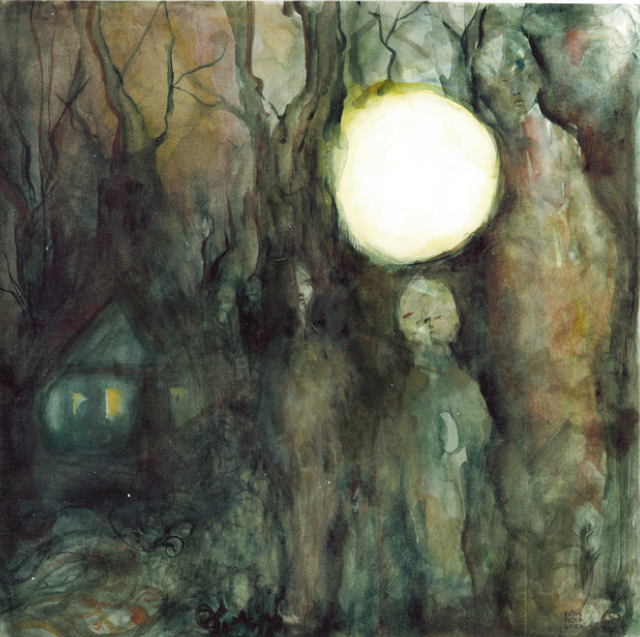
November 2022 continued this year’s streak of amazing music, with some of the most forward-thinking, exciting releases being dropped this month. I was especially impressed with the triumphant East Coast hip-hop of Nas’ King’s Disease III and Astrophysics’ introspective coldwave on HOPE LEFT ME. However, neither of these albums matched the sheer emotional impact of the conceptual art pop on Quadeca’s I Didn’t Mean To Haunt You.
Yes, that Quadeca. If you had told me three years ago that Quadeca would release one of the most innovative, insightful, and moving albums of the year, in a year that has been genuinely exceptional for music, I would have likely said “Quadeca? The guy who made the KSI diss track?” Yet here we are. In 2019, Quadeca released his first album, Voice Memos, which is frankly one of my least favorite records. He showed astronomical improvement in only two years when in 2021 he released From Me to You, which featured “Sisyphus,” a truly breathtaking experimental hip-hop track about balancing ambition and connection. While the project as a whole wasn’t able to keep up the level of quality demonstrated on “Sisyphus,” it was still an impressive effort from a YouTube rapper most known for his videos parodying other rappers.
Quadeca fully capitalized on his potential with I Didn’t Mean to Haunt You. An album awash with haunting vocals and minutely-detailed instrumentals, it tells a somewhat loose narrative of a ghost coming to terms with his death. To be blunt, the lyrics across this record are incredible. Quadeca displays a level of vulnerability and introspection rarely seen from pop artists, especially from someone who began their career with parody videos and YouTube beef. But to me, the existential lyrics are not the most interesting part of this album, nor are the paranormal soundscapes.
The most interesting part of this album for me is how abruptly Quadeca was able to come into his own as an artist. Over the course of less than three years, Quadeca went from being a run-of-the-mill YouTube trap artist to making, in my opinion, one of the best albums of all time. Take an artist who’s had a similar artistic trajectory to Quadeca thus far: 90’s Japanese neo-psychedelia band Fishmans.
In 1991, Fishmans released their first album, Chappie, Don’t Cry, a generic, one-dimensional pop reggae project. Seven years later, Fishmans played their final show, which has been immortalized on 98.12.28 男達の別れ. This album, culminating in a 40-minute long performance of their song “LONG SEASON,” is one of the most moving, emotionally engaging pieces of art I’ve ever come across – which begs the question, how did a band that began with such unoriginal, nondescript music, eventually produce such a forward-thinking, progressive record?
There’s no single answer – lots of factors influenced Fishmans from personal experiences, shifting musical trends, increasing popularity, and even just simply having more experience. Regardless, Fishmans is one example of a band having a drastic increase in quality throughout their career.
However, it took Fishmans nearly a decade to find their niche. It’s taken Quadeca less than three years. How was he able to do this so fast? And the answer is largely the same; just as Fishmans experienced a boost in popularity, so has Quadeca. Just as Fishmans were inspired by the advent of dream pop, so has Quadeca been inspired by the Jane Remover-brakence-Clarence Clarity scene, combining indietronica textures with underground hip-hop aesthetics.
But what separates Quadeca from Fishmans is their mode of dissemination for their art. Whereas Fishmans were limited by technology and had to rely entirely on physical sales to increase their reach, Quadeca has been tied to the immediate global market of YouTube from his beginning, as have the musicians inspiring Quadeca. He’s been able to increase his market so drastically because of the international reach he has inherent to his core platform, giving him access to increased resources that afford him greater opportunities for creative production. Likewise, the artists that inspire Quadeca have been able to increase their reach in similar, albeit less dramatic, ways, allowing them to accelerate their artistic development as well. Thus, we see a cycle emerging, leading to the accelerated development of an artistic identity based on the digitalization of music.
I Didn’t Mean To Haunt You is an incredible album, and easily the best of the year (so far!). All hypothesizing about his artistic development aside, the record is an extraordinarily impressive feat for Quadeca, and I can’t begin to imaging where he’ll go next if he continues maturing at this rate. It’s an emotionally engaging experience, and I really can’t recommend it enough. If there’s one thing you take away from this article, don’t make it the KSI diss track origins or the obscure Fishmans comparison; go listen to I Didn’t Mean To Haunt You. It’s an album that continues to move me, and one that everyone deserves to hear.