
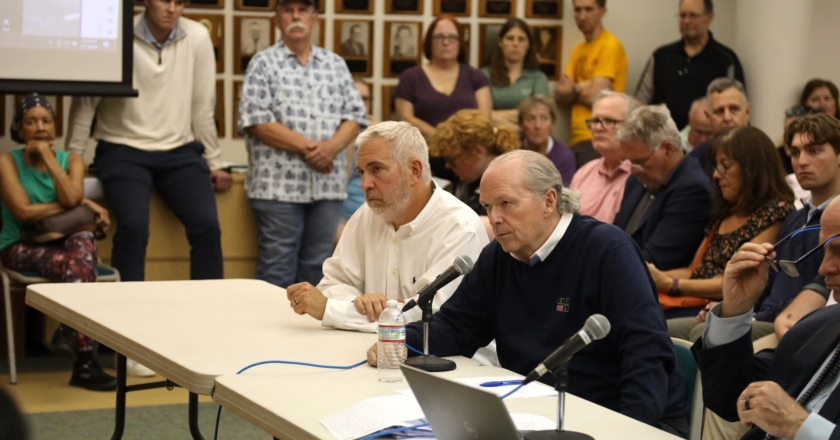

Recent proposals reintroduced in early May of 2026 for the construction of AI data centers by founder and CEO Brian O’Neill of Main Line Properties (MLP) Ventures have been met with controversy and local pushback.
MLP Ventures has proposed a two-million-square-foot data center on Conshohocken Road, Plymouth Meeting, bordering the Schuylkill River. Because of the rise in discussion about this topic, AI data center construction is playing a key part in midterm campaigning.
Data centers are being built on the premise of helping internet infrastructure, including support for AI, cloud computing and digital services. However, to maintain these facilities, massive amounts of electricity and water are needed, not to mention resource consumption and funds going into the investments for these centers, something that O’Neill and his team have not been completely transparent about in their public hearings.
“I think it’s really complicated,” Upper School science teacher Dick O’Hern said. “AI has tons of promise for transforming the way we approach solving problems…I’m not against data centers so much, but instead how they’re being built without communities knowing what’s going on.”
After an initial withdrawal of the proposal for a data center on Conshohocken Road in Montgomery County due to lack of legal standing regarding the property, hearings for the project have been in continuation since the summer of 2026.
At public hearings, local residents have been voicing their opposition with protests about water use, as data centers are known to consume millions of gallons of drinking water daily in order to keep systems running and prevent overheating.
“I think those impacts [water usage] need to be known and stated ahead of time and made clear to communities because there really can be some challenges,” GA Environmental Awareness Club leader Molly Beggs ‘28 said. “They’re struggling with either lack of water or less flow of water than they had, and those are real problems for real people.”
Noise has also been a core issue, especially with multiple residential communities and downtown Conshohocken near the planned construction area, as well as the impact on the environment around it.
“The noise thing — I understand it’s real,” Mr. O’Hern said. “I haven’t heard figures this year, but apparently they can be pretty loud because of the fans that run, and there’s buzzing noises… It’s pretty darn unpleasant if you live nearby.”
To address community pushback, O’Neill has responded by stating that, in order to reduce the consumption of water, the data center will use a closed-loop system that reuses water and publicly claimed that data facilities will not create excessive noise. He also claims that data centers will be beneficial to the local economy, as the opening of such centers will also provide new job opportunities due to current active hiring for data center infrastructure roles and construction.
Despite these claims, O’Neill has been rejecting the local safety and environmental criteria set by Plymouth Township officials, including 43 conditions addressing noise, protection of the local Schuylkill River water usage, energy sources and environmental impact.
With the topic having entered midterm campaigns, it has become a key part of political debates between multiple midterm candidates. State Governor Josh Shapiro and his opponent, Stacy Garrity, are using data centers as a battleground for their midterm race. In August 2026, Shapiro publicly stated he would oppose AI data center construction, despite his initial support of fast-tracking data centers. Garrity criticized Shapiro’s switch, accusing him in her campaign ads of gaining funds from data center-interested companies, such as Amazon and Microsoft.
Indeed, AI data centers have shaped midterm campaigns on every level, from local district elections to senator races, with many candidates taking a stance on the ongoing data center construction debate.
“I think it’s good that people notice data centers’ importance and are taking a stance on it,” Beggs said. “I would want to see a follow-through. [What] I don’t want to happen after the midterms [is that] we kind of forget about the data centers happening. But eventually something else is going to happen that is bigger than the building of these data centers, but that doesn’t take away its importance and impact.”
Conshohocken and the planned data center area are within close proximity to GA, only around 10 miles away from the GA campus. As this new technology is adopted, its purpose, local government applications, and community impacts are being increasingly examined by the local GA community and surrounding communities alike.
Data center discussion continues to be on the rise, both locally and across the nation. It has been shaping midterm campaigning and has also been debated locally, especially with O’Neill’s continued proposals for the Conshohocken data center against local resident and official concerns.Conshohocken Data Center Proposal stirs statewide attention