
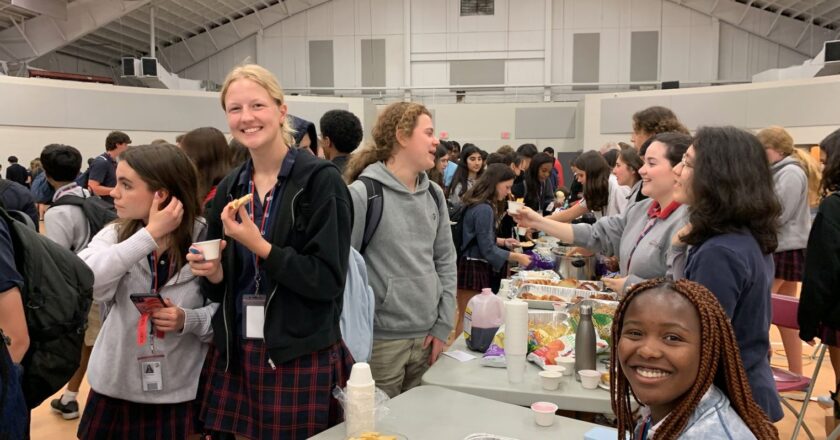

At one stand, there are crispy fried dumplings. At another lies a tray of savory tamales. One stand even has a giant triple-layered chocolate cake. For every dish, ten students stand in its vicinity yearning for a piece, even if it’s just a crumb. For a moment, the school feels a little louder, warmer and more connected than usual.
Germantown Academy’s International Food Festival (GAIFF) is a community-loved celebration where faculty and students share dishes from their cultures, transforming the campus into a global marketplace of flavor and stories. More than just a meal, the festival is an invitation for our school to experience diversity, which is why we must bring it back.
The last GAIFF occurred during the 2023-2024 school year, my first year at GA. Coming from a school that rarely celebrated different cultures, the experience was eye-opening. Naturally, I visited every stand I could, despite the bustling crowds and lines, to fit a little bit of everything into my small, paper plate.
GAIFF serves as a cultural platform that encourages faculty and students to engage with different cultures. Rather than learning about them through textbooks, the festival provides firsthand exposure and a rare opportunity that we were lucky enough to cherish.
Food is more than sustenance, and GAIFF proves that. Food is representation. For students from underrepresented cultures, being able to represent themselves through food is a powerful reminder that their traditions are seen and valued.
In addition, the event strengthens community connections. Not only did the people who brought food feel appreciated for their culture, but everyone also bonded through this shared meal.
I vividly remember seeing groups of people sitting together around tables, chatting and laughing while simultaneously enjoying the food. Even though GA had no phone restrictions at the time, there were hardly any phones in sight.
In an environment where students are often divided by schedules, grades and obligations, GAIFF offers a rare moment of unity. Unlike the structured interactions in classrooms and meetings, the festival’s informal setting allows for genuine conversation. Moments like these need to be integrated more into GA’s social fabric, not treated as rare exceptions but as essential traditions.
Bringing back GAIFF is more than just about reviving a beloved event: it is about choosing connection, celebration and inclusion in a time when school life can feel overwhelmingly stressful and divided. If we want a community that values cultural appreciation as much as achievement, then it is time for students, faculty and administrators to come together and make GAIFF a tradition again.