


On July 4, President Donald Trump signed the One Big Beautiful Bill (OBBB), enacting various changes to government assistance programs such as the Supplemental Nutrition Assistance Program (SNAP), cutting funding by $186 billion over the next decade. SNAP also underwent delays and interruptions during the 2025 government shutdown, leading to tremendous burdens being placed upon the shoulders of both low-income families and food aid programs.
SNAP is a government-funded food assistance program that provides an average of $6 a day to approximately 42 million Americans every month. Offering nine times as many meals as a food bank, SNAP plays a significant role in aiding vulnerable communities struggling with food insecurity and poverty.
“We do have more people in our community whose families may experience economic insecurity than we know,” Dr. Julie Kimmel, Upper School history teacher and Department Chair, said. “Everyone is connected, so when people in our communities beyond GA don’t have access to what they need, it impacts us indirectly.”
Through the passing of the OBBB, SNAP is not only experiencing the largest cut in its history, but eligibility requirements for SNAP have also been crucially changed, cutting off roughly one million people from aid. Previously, only able-bodied adults from ages 18 to 54 were subject to work requirements; however, now, they have expanded to adults aged up to 64, requiring 80 hours of work every month. If they do not meet these requirements, they must have a child under the age of 14, or they will only receive aid for three months out of three years.
“I think it’s important for people to consider that this program serves over 10 percent of Americans,” Dr. Kimmel said. “So we live in a country where 10 percent of people qualify as food insecure, and it’s actually difficult to qualify for SNAP. Those are families with children, [often] people with a job.”
The 43-day government shutdown caused more than a temporary disruption; this was the first shutdown to cut SNAP benefits, sparking concern that the government has used SNAP cuts as leverage and political pressure. In addition to the OBBB shifting SNAP funding from a 50-50 to a 25-75 split between the federal government and states, during the shutdown, the U.S. Department of Agriculture (USDA) announced that November SNAP benefits would be paused, putting state administrations into difficult positions, as they lack the administrative and financial resources available to the federal government.
As a result, the reduction of government assistance for those in need makes it even more crucial for more privileged people to stand up. The GA community helps support numerous local families who experience food insecurity and may have been impacted by the SNAP cuts.
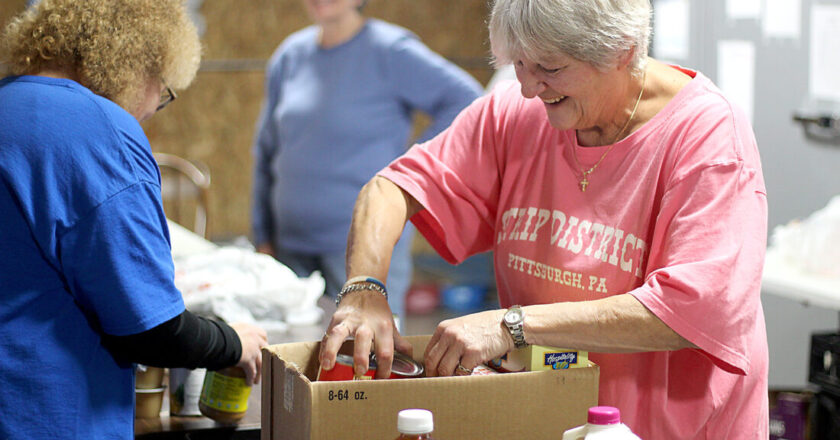
GA’s Community Service Organization (CSO) helps run various food drives, most notably the Thanksgiving Food Drive, donating food and money to places like the Mattie Dixon Community Cupboard, which aim to support people in need by providing various resources, goods, and services.
“GA has a really strong reputation of having lots of community service,” Cece Fikioris ‘26, a CSO senior leader, said. “We can always do more. So to continue with our food drives or holiday drives with the clothing, and continuing to advocate around the schools [is a way GA can help].”
CSO raises both material resources, such as food and money, as well as awareness. Participating in these events helps not only those in need but also teaches GA students valuable life lessons.
“I think as a school, [we can help by] making sure that our students learn the value of service,” Mr. Jamie Murray, Upper School history teacher, said. “Food drives are one part of it, but just more of an awareness that there are lots of people who need help out there, and that it’s an obligation of citizens in this country who are well off to support various programs for those who are struggling.”
Ultimately, the changes brought by both the OBBB and 2025 government shutdown have severely impacted SNAP funding and eligibility, leading to a much greater strain on low-income families, food banks and state administrations. Although GA and numerous food assistance programs play significant roles in supporting food-insecure communities, only the federal government has the resources available to fully restore SNAP benefits, and until they do so, struggles will continue to rise for the financially vulnerable.
“What I hope is that it prompts people to learn more about food insecurity and to be curious about why we have food insecurity, and to look for ways to address it, because it’s a social justice issue,” Dr. Kimmel said.