


Every Day 1 at Flex, over 40 students gather for an SGA meeting led by President Andreas Szautner ‘26, Vice President Gabe Meinstein ‘26, and Secretary Sophia Song ‘27. They set the agenda, take input from other members, and strategize ways to make every day better for the student body.
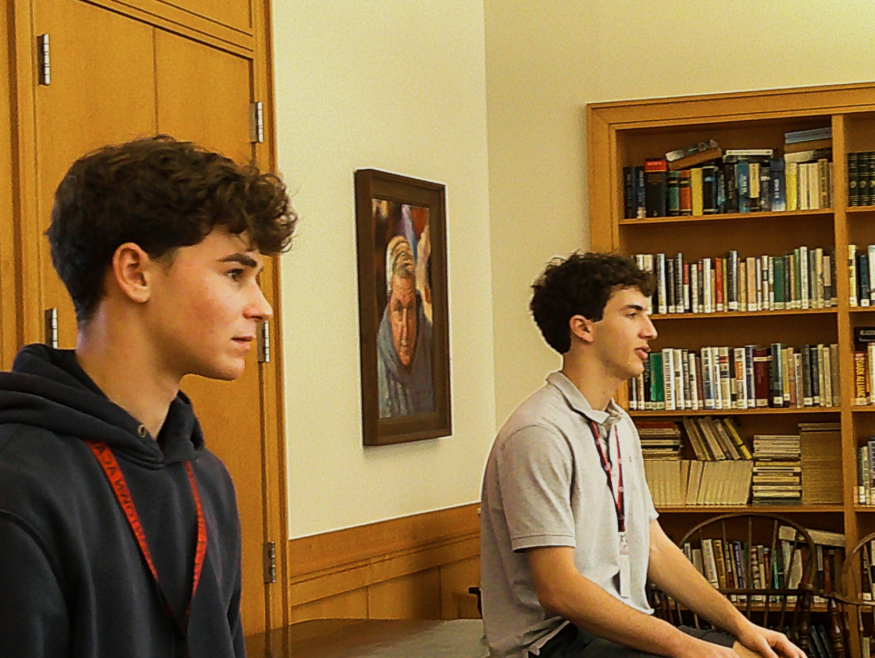
This year, these three members are prioritizing making long-lasting structural changes to SGA, prioritizing SGA productivity and communication with the student body.
One major initiative is the reorganization of the committee system. Rather than having five large committees, there are going to be smaller, task-based committees with groups of four to five.
“I want to make [SGA] a space where each student is feeling genuinely involved with a shared mission,” Meinstein said. “I know in past years the shared missions were very broad – for example, activities. We want people to try their own thing so we made each committee have one specific task.”
In the old committee structure, a few students would take charge of the committee, creating most of the ideas and doing most of the work, allowing many in SGA to sit back and not contribute.
“Last year, in SGA, there was not a lot of productivity happening,” Szautner said. “ I believe that was largely because of larger committees which had about 10 to 12 people per committee, and that gave a lot of ways for people to sit back and not do any work.”
With the new structure, these three hope to combat this issue, believing that smaller committees allow each person to contribute.
Additionally, the leaders believe that this new committee system will allow for more between grade collaboration, helping new students learn the ropes of SGA.
“In past years, we’ve seen a lot of freshmen or underclassmen be left out of the committees, and they were not as comfortable sharing out,” Song said. “This year we are going to make sure that each group inside the committee has various people from different grade levels, so it will create new perspectives and help the underclassmen.”
Another problem that SGA is trying to address is a lack of communication between SGA and the student body, which leaves many important voices unheard. This year SGA plans to utilize House representatives to fix this communication barrier.
They plan to create a system called “meeting minutes” that would take time during SGA meetings to discuss, with the House representatives, what they can share at the next House meeting.
“I’m trying to streamline the communication between the House reps in SGA and the student body,” Song said. “We would be able to give a summary of what each committee is working on and our goals for the next couple of days, and we would give that to the House reps so they could deliver to their houses.”
Lastly, SGA’s new leaders hope that this will encourage students to give feedback to the club and highlight places that need improvement.
“SGA meetings are always open to any students who want to come,” Szautner said. “I encourage anyone who has an opinion, positive or negative, to swing by or stay for the whole meeting and listen or voice your opinions.”
By focusing on internal changes, this year’s SGA leadership is rebuilding the foundations to create a student government that can truly serve the student body.