

Since TikTok first became embroiled in controversy in 2019, ownership of the app has been a major topic of discussion for many people. The primary fear regarding TikTok has been that the Chinese government can access data harvested by the app and its parent company, Chinese software company ByteDance. After years of scrutiny and exposés of the app’s invasive activity, a deal for ByteDance to sell TikTok is nearing completion.
To avoid a shutdown in the United States, ByteDance would need to either sell the app or find an alternative solution that transfers control of user data to Americans. In mid-2025, reports surfaced of a new version of TikTok named “M2” in development, and that it would only be accessible in the US. Besides this, however, M2 appears to be identical to TikTok. According to Reuters and Bloomberg, US investors are expected to hold an 80% stake in the app and occupy the majority of board seats.
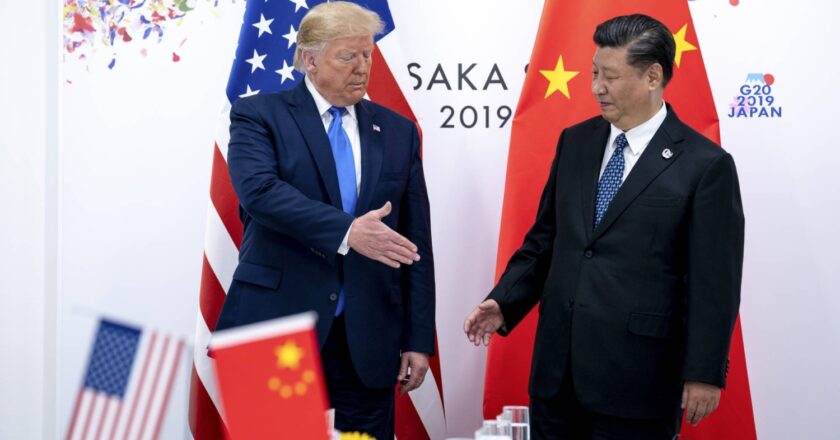
On Sept. 19, nine months and four separate extensions after the original TikTok ban due to drawn-out negotiations, US President Donald Trump and Chinese President Xi Jinping met via phone call and approved the TikTok deal. This agreement would supposedly allow the sale of TikTok’s US operations to American buyers, but Chinese media has been less clear, with Xi saying he “welcomes negotiations over TikTok” without confirming any agreement.
The American buyers are still unknown, but Trump indicated that possible investors could include the Murdoch family, who own Fox Corporation and a controlling stake in media conglomerate News Corp; Michael Dell, CEO and Chairman of Dell Technologies; and Larry Ellison, co-founder of software company Oracle. These technology and media tycoons all recognize TikTok’s huge potential for profit and integration into their various platform ecosystems, and partial ownership would also massively benefit political influence, global reach and cultural power.
With plans for Xi and Trump to meet again in South Korea and the deadline for ByteDance to sell TikTok extended yet again to Dec. 16 for further negotiations, the future of TikTok remains ambiguous.
The widespread usage of TikTok and its potential implications draw mixed opinions. Some find the app’s landscape toxic and a cause of multiple issues, such as loss of focus. Others view it as a creative and modern form of expression.
“I think there are positive and negative aspects of TikTok, ” Grady Moore ‘28 said. “On one hand, it serves as a modern-day form of news and entertainment, but it can also take valuable time away from you and lead to procrastination.”
The possible idea of a secondary TikTok app only available in the US is also controversial.
“I do not like the idea of an American-only TikTok app,” Abhay Kumaran ‘27 said. “I think changing the ownership will do nothing for transparency about data privacy.”
As the TikTok decision date looms ahead, students will continue to use the app to make videos and interact with each other. Regardless of the eventual owners and future timeline of the app, its presence and widespread popularity will leave an indelible mark on the social landscape of digital media.