
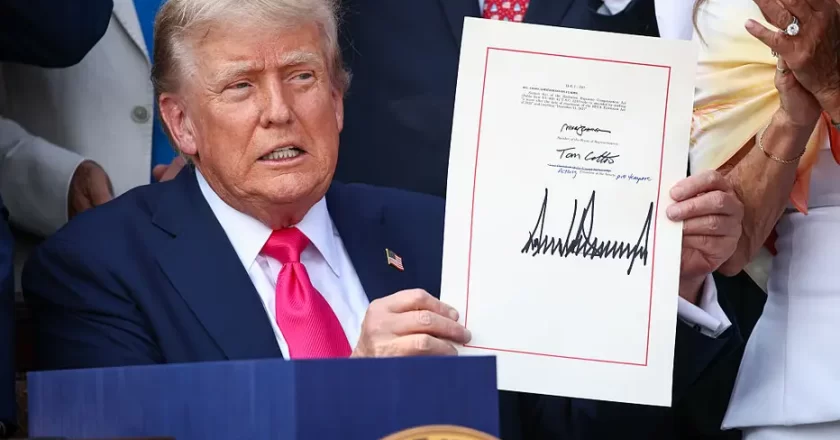


President Donald Trump signed the One Big Beautiful Bill Act (OBBBA) into law on July 4, which made significant changes to federal college programs. The bill is a part of an agenda marked by a shifting relationship between the government and universities, as well as big changes affecting students and families across the country.
The OBBBA implements new caps on federal student loan borrowing, which will disproportionately affect different groups, having a much greater effect on those who use the loans more frequently, such as Black or Latino families.
The bill also removes the Grad PLUS program, which allowed graduate students unable to cover tuition to receive further assistance from the government. Combined with the removal of the Parent PLUS program, which allowed parents to take out loans for their children, universities that receive much of their tuition money from graduate students will be hurt financially.
Additionally, colleges are now going to be held accountable for the success of their graduates via government-issued examinations. If graduates of college programs fail to earn more than the median income of people from the area with just a high school diploma, the program is at risk of losing access to federal student loans.
Many people have criticized the Bill’s controversial modification to the federal government’s spending and lending. The changes will make a difference in the lives of many, as a study conducted by the US News & World Report found that 61% of nearly 1,200 college students surveyed felt they would be directly impacted by the changing laws.
“The greatest tool that people can use to challenge any of those policies is knowledge and education, and being able to communicate that effectively,” Mr. Robert Moyer, Upper School history teacher, said. “When you negatively affect [systems of education], then that information is not available… it makes it so frustrating that people are unable to advocate for themselves.”
People who rely on government assistance may no longer have their educational and financial needs met, and as funding for college aspirations becomes narrower, it may discourage students from pursuing their academic dreams, altering life paths entirely.
For some families in the GA community and surrounding areas, the bill will likely have a profound effect on people’s daily lives and college plans. Many students could be left having to switch which colleges they intend to apply to because of the new conditions surrounding student loans. However, whether schools will shift to align with Trump’s ideals or whether the policies will bring communities closer together is yet to be determined.
“It forces schools to be clear about what values they represent,” Mr. Moyer said. “I think the intention is that it causes divisions within a school like ours, and it causes changes in our policies. This is the idealistic view: that it actually [may] end up bringing a school like ours more together… If that then provides a greater sense of commitment to each other, that might be a clarifying moment for the school.”
The relationship between the government and the American education system continues to evolve, and its effects will be felt in both universities and schools like GA throughout the nation for the next several years.