


Beth Kander’s ideal day looks a lot like something out of a screenwriter’s Pinterest board, swirling with steaming coffee mugs, the muted ambience of a busy coffee shop and the quiet rhythm of typing up a new story. Her reality, though, often looks a little different.
“My ideal writing day is in a coffee shop with a nice, big mug of some fancy latte and getting to spend three or four hours completely uninterrupted,” Kander said. “But I also have two small children and a whole lot going on, so sometimes it also looks like just jotting down notes in my notes app on my phone and texting that to myself.”
Kander will be visiting GA on Friday, Dec. 13 as part of the Writing Center’s Visiting Writers Program. Kander has won numerous awards for her plays, and her debut novel, I Made It Out of Clay, was recently published on Dec. 10. She also serves as visiting faculty at Mississippi University for Women, where she earned her Master of Fine Arts (MFA) degree.
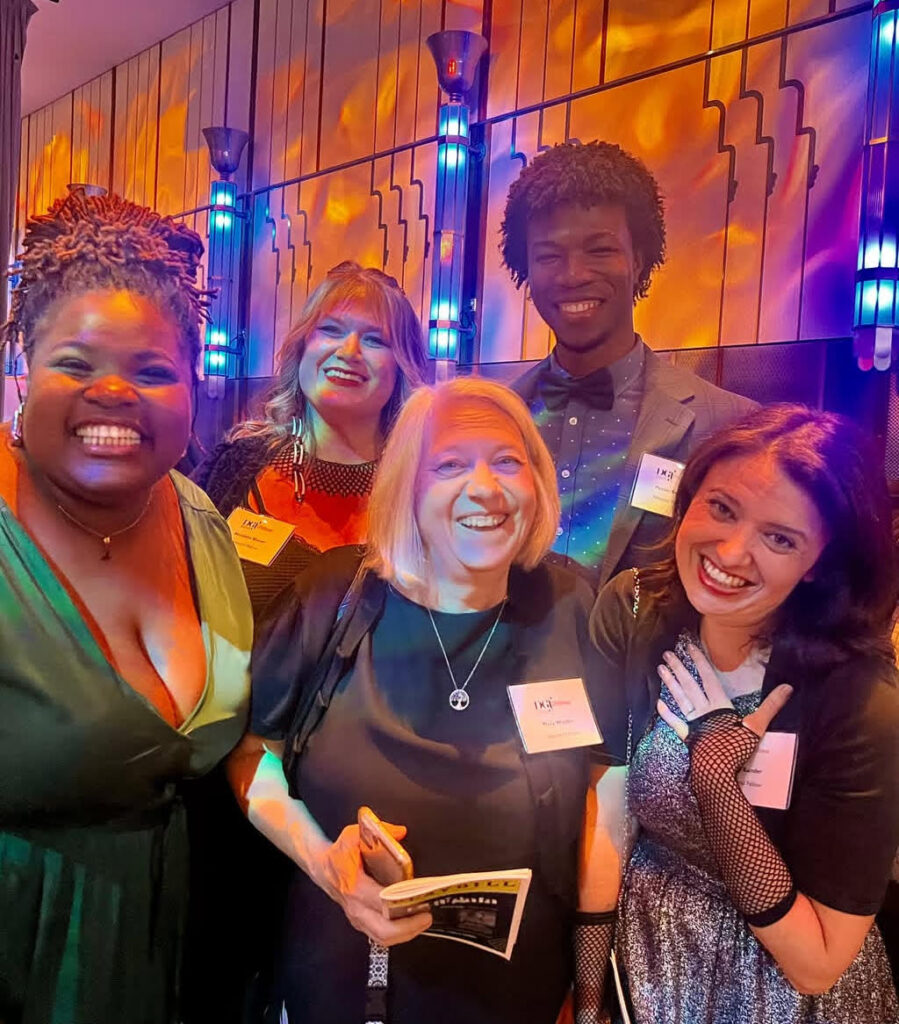
“Visiting Writers is a really big part of the Writing Center program and has been since the beginning,” Mrs. Robynne Graffam, Writing Center Director, said. “I’m always looking around for people who might be interesting to come talk to students. Beth happens to be a friend of mine that I met at a writing retreat, and I knew that she has a brand new book coming out soon, so I [thought] that it would be a very exciting connection of events to have her here.”
During her visit, Kander will be visiting several English fiction-writing classes and Honors acting classes. In the fiction classes, she will bring in the first draft of the first chapter of I Made It Out of Clay and, comparing it to the published version, talk through the revision process. In the acting classes, she will bring in a couple of scenes from some of her plays, including The Bottle Tree, which has a majority high school cast, and go through a similar process. She will also be hosting a reading and Q&A session during lunch and Flex open to anyone.
“I’m really excited to get to be in the classroom with students,” Kander said. “We’ll be doing some writing [in the fiction classes] that dovetails with what we’ll be learning with the revisions…In the acting classes, I’m actually going to give them an opportunity to weigh in on one of the newer pieces that I’m working on, because I deeply value the contributions of other artists, and I know that anyone who’s interested in acting is going to have something to say about a script.”
“[Having visiting writers] is one of my very favorite parts of what we do, because I think it’s really valuable for students to get to interact with professional writers and to learn a little bit about what they do and how they do it,” Mrs. Graffam said. “I think writers seem a little bit exotic and mysterious sometimes, but when you actually get to talk to the live human beings that do that all the time, it makes it feel a lot more accessible.”
With a wide breadth of work spanning diverse genres, from plays to picture books and novels to poetry, Kander has gained unique insight into different styles of writing and each one’s distinct features. For her, every story is a little bit different and so requires a different writing process. Plays, for example, are a much more collaborative venture than writing a novel.
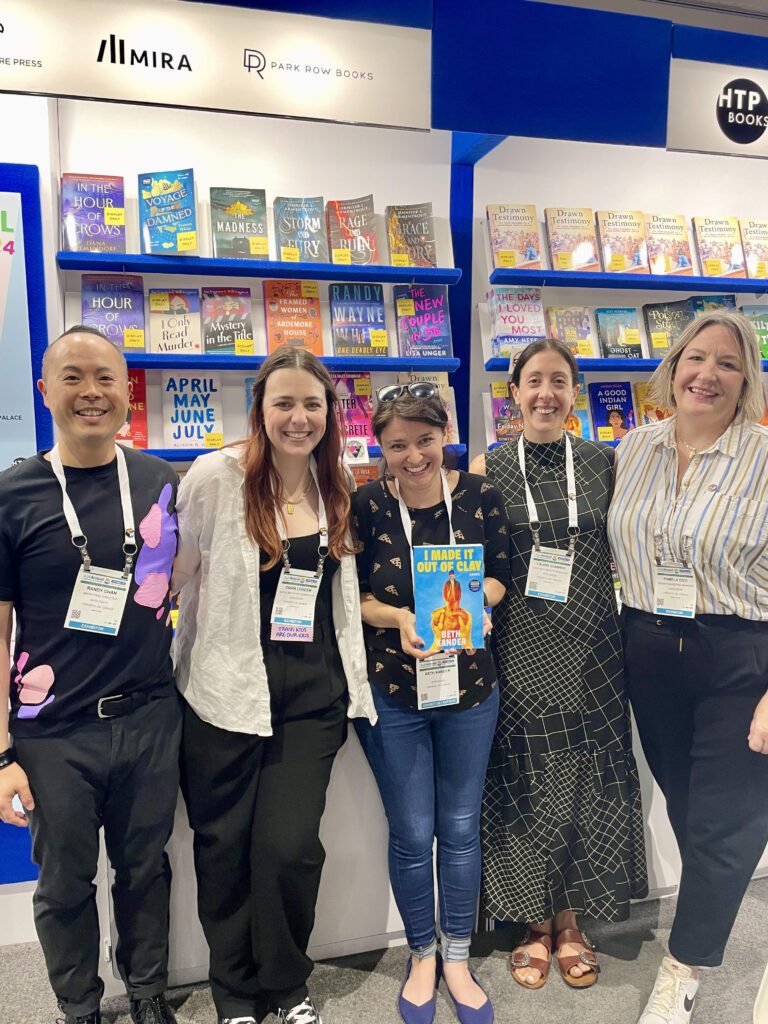
“When you’re writing a play, very early on it’s a team sport,” Kander said. “As soon as I have even just the ugliest first draft, I have actors and a director weigh in. There are lighting and sound designers, and you can trust that these other artists will help unlock some of the storytelling. With a novel, it’s just you until you have a fairly fleshed out second or third draft. You spend a lot more time just in your own head.”
While Kander had always been interested in writing – as a young child, she began by writing short stories about unicorns and other fantasy animals – her journey to becoming a professional and published writer did not happen overnight.
“I’ve definitely always been a storyteller, but it was much later that I decided to become a professional writer,” Kander said. “I did minor in creative writing [as an undergrad], but I was more focused on jobs that are a little more stable than writing. It really wasn’t until I was in my early 30s that I had enough of a body of work and a growing realization that my passion for writing was never going away, that I decided to start thinking of myself as a professional writer.”
As a writer, Kander describes her work as exploring how “worlds old and new intertwine—or collide”, a theme that she traces back to her culturally diverse family. Kander emphasizes the importance of authenticity in her work and often draws inspiration from her own background and experiences.
“One of the reasons that I like to say that I explore how worlds old and new can collide is that it’s almost a reminder to go back to the various pieces of my identity and the different folklores or tropes that are authentic to me,” Kander said. “I also love the invitation of ‘old and new’ – stories don’t have to live in the past, we are the ones now who are going to leave those stories behind.”
For example, I Made It Out of Clay, a dark and heavy yet romantic and comedic novel about a Jewish woman, Eve, touches on themes personal to Kander, such as family, grief and antisemitism. By drawing directly from impactful events in Kander’s own life, she creates a haunting and deep narrative of Eve’s personal growth and change.
“There’s a lot of ways that [I Made It Out of Clay] is deeply personal, and that made it both easier and harder to write,” Kander said. “Some incidents in the book are based on things that really happened, like when there were swastikas painted on a bunch of garages in my neighborhood. But later, there was also a wonderful neighborhood vigil that brought everyone together. It’s not great to have that sort of stuff to draw from, but I also think it gives us some important reminders that I explore in the book.”
While these events may be sometimes difficult to talk about, Kander believes that writing and storytelling offers a powerful platform to express and explore painful themes that are difficult to talk about otherwise.
“The beautiful thing about fiction is that it allows us to talk about things like antisemitism, misogyny and the societal pressures put on women, grief and the way it can temporarily really change us,” Kander said. “When you use a story to explore that, it becomes this incredible platform to make it not about you or me, but about these characters. But then we really do get to you and me and explore these things that are otherwise really hard to talk about in a tangible way.”
As a result, I Made It Out of Clay represents a substantial shift in Kander’s writing content: previously, her books had been targeted towards younger audiences, and her plays, though covering a diverse set of topics, similarly carried more lighthearted tones. Kander welcomes this change, however, and looks forward to continuing to explore longer works for more mature audiences.
“I had several friends who, before they looked into what [I Made It Out of Clay] was about, asked me like ‘should I get it for my nine year old?’ And I’m like, no, no, this isn’t a book for kids,” Kander said. “It’s given me the chance to really think about what my vibe is as a novelist, and I think that this novel gives me the opportunity to be the sort of storyteller that can entertain you while giving you an invitation to think about complicated things and maybe in a new light.”
In the near future, Kander will continue to pursue novel-writing and keep developing I Made It Out of Clay, which is currently in the early stages of being adapted into film. However, this doesn’t mean that she will stop writing plays or picture books – Kander sees her writing as something that won’t ever only fit into one genre.
“Each story needs to be what it needs to be,” Kander said. “Some of my play ideas wouldn’t really work as a novel: they need an audience, they need interaction. I definitely wouldn’t say that I’ll never write for younger readers again, but I do think that, for the time being, the adults and young adults space is where I’m going to stay, because it’s where so much interesting storytelling is happening.”
As a result, writing, for Kander, is a fluid and constantly changing journey. For younger writers especially, improving one’s writing will inevitably take time and practice, but that process of growth can be incredibly valuable in and of itself.
“Write. Every day. It’s the simplest advice but truly the only thing that’ll make you better,” Kander said. “I’m a big believer that you don’t have to pick a genre. Even if you see yourself as a poet, if you have an idea that you think should be a novel, try it. Your poetry experience is going to make it a more interesting novel, the same way that a lot of the dialogue I write is definitely influenced by all of the time I’ve spent in the theater. Let yourself chase every story wherever you need to go to find it.”